
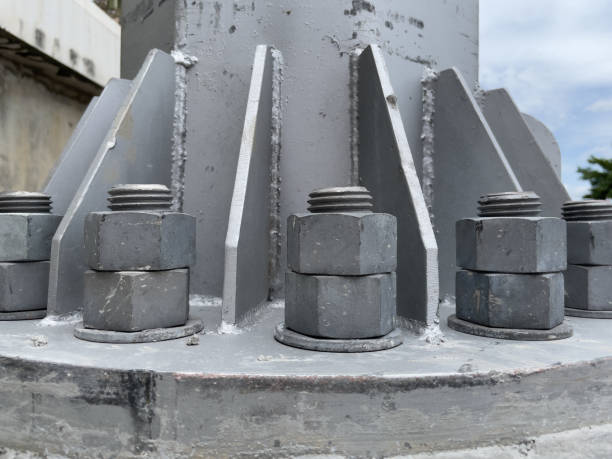
Anchor Bolts & Base Plates: Proper Installation and Inspection
In steel construction projects, structural stability begins at the foundation level.
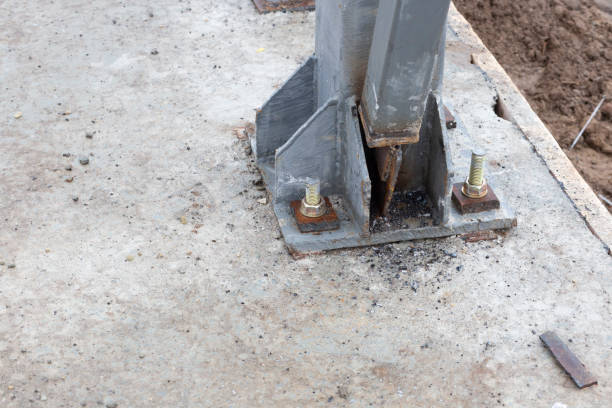
Understanding Anchor Bolts & Base Plates: Proper Installation and Inspection is essential for ensuring that steel columns are securely connected to concrete foundations.
These components transfer loads safely from the superstructure to the footing while maintaining alignment and structural integrity.
A mistake in anchoring can lead to costly structural misalignment, delays, and even long-term safety risks.
That is why mastering Anchor Bolts & Base Plates: Proper Installation and Inspection is not just a technical requirement — it is a quality assurance necessity.
From installation tolerances to grouting procedures and on-site verification, every stage plays a vital role in delivering a high-performance steel structure.
In this comprehensive guide, we explain how to optimize Anchor Bolts & Base Plates: Proper Installation and Inspection for durability, safety, and compliance with international standards.
Understanding Anchor Bolts and Base Plates in Steel Structures
Understanding Anchor Bolts and Base Plates in Steel Structures
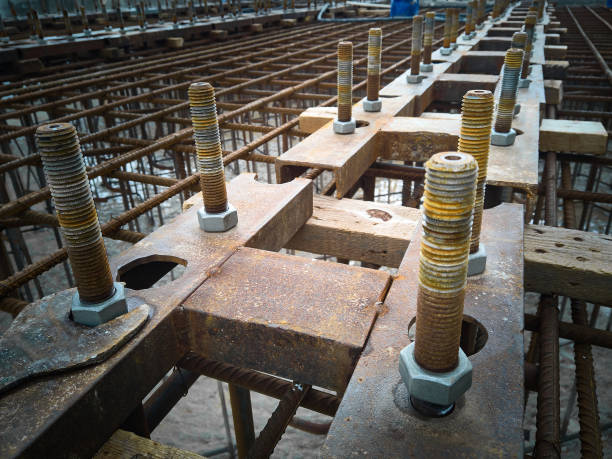
To fully grasp Anchor Bolts & Base Plates: Proper Installation and Inspection, it is important to understand the structural role of these components.
Anchor bolts are embedded into concrete foundations and provide the primary mechanical connection between steel columns and the footing.
Base plates distribute column loads evenly across the concrete surface, preventing localized stress concentrations.
Different types of anchor bolts are used depending on load conditions, including L-shaped, J-shaped, and straight threaded rods with mechanical anchors.
The base plate thickness and dimensions are calculated according to axial loads, bending moments, and shear forces.
Improper design or incorrect bolt embedment depth can significantly reduce structural capacity. Therefore, engineering calculations must consider tensile strength, pull-out resistance, and shear capacity.
A solid understanding of Anchor Bolts & Base Plates: Proper Installation and Inspection ensures structural stability from the ground up.
Installation Tolerances: Positioning, Projection, and Leveling Nuts
Installation Tolerances: Positioning, Projection, and Leveling Nuts
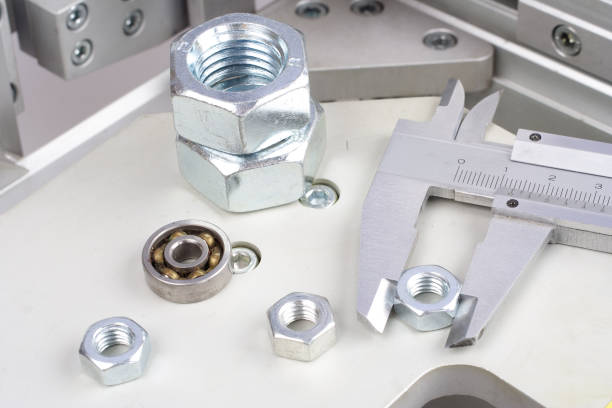
Precision is critical when applying Anchor Bolts & Base Plates: Proper Installation and Inspection.
Even small deviations in bolt positioning can prevent columns from seating correctly on base plates.
Anchor bolts must be positioned according to approved shop drawings using templates or setting frames to ensure alignment accuracy.
Horizontal tolerance typically ranges within a few millimeters depending on project standards.
Bolt projection height must also be controlled to allow sufficient thread engagement without interfering with leveling nuts.
Incorrect projection may lead to inadequate tightening or excessive shim usage.
Leveling nuts are used to adjust column elevation before grouting. Ensuring they are evenly tightened prevents uneven load distribution.
Strict tolerance control enhances the success of Anchor Bolts & Base Plates: Proper Installation and Inspection, reducing costly field corrections.
Grouting Basics: Types, Pouring, and Curing
Grouting Basics: Types, Pouring, and Curing
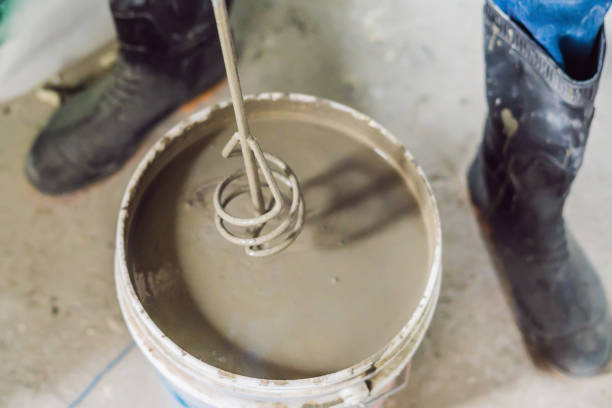
Grouting is a fundamental step in Anchor Bolts & Base Plates: Proper Installation and Inspection because it ensures full load transfer between the base plate and concrete foundation.
Non-shrink grout is commonly used to prevent shrinkage cracks and maintain contact under load.
Cement-based and epoxy grouts are selected depending on load intensity and environmental conditions.
Before pouring grout, surfaces must be cleaned of dust, oil, and debris.
Proper formwork is required to contain grout and ensure uniform placement beneath the plate.
Curing time is critical — premature loading may weaken the bond and reduce compressive strength.
Correct grouting practices significantly improve long-term performance in Anchor Bolts & Base Plates: Proper Installation and Inspection applications.
On-Site Checks: Surveying, Plumbness, and Final Tightening
On-Site Checks: Surveying, Plumbness, and Final Tightening
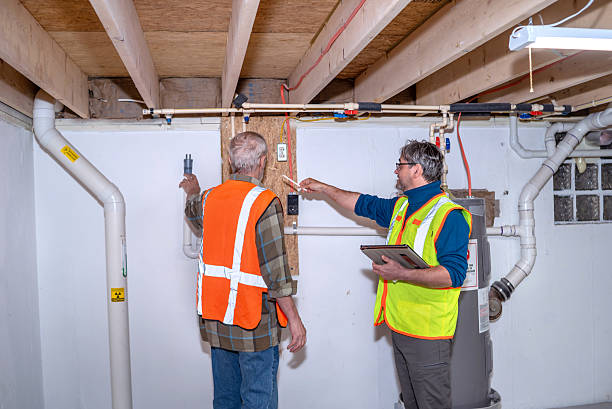
Quality control is a key element of Anchor Bolts & Base Plates: Proper Installation and Inspection.
After column placement, surveyors verify alignment and verticality using total stations or laser equipment.
Plumbness tolerance must comply with structural standards to prevent additional stress on beams and connections.
Once alignment is confirmed, anchor bolts are tightened using calibrated torque wrenches according to specified torque values.
Over-tightening may damage threads, while under-tightening compromises structural stability.
Final inspection includes checking grout curing, bolt tension, and plate contact surface.
Comprehensive site verification ensures that Anchor Bolts & Base Plates: Proper Installation and Inspection meet structural safety requirements.
Common Failures: Misplaced Anchors and How to Fix Them
Common Failures: Misplaced Anchors and How to Fix Them
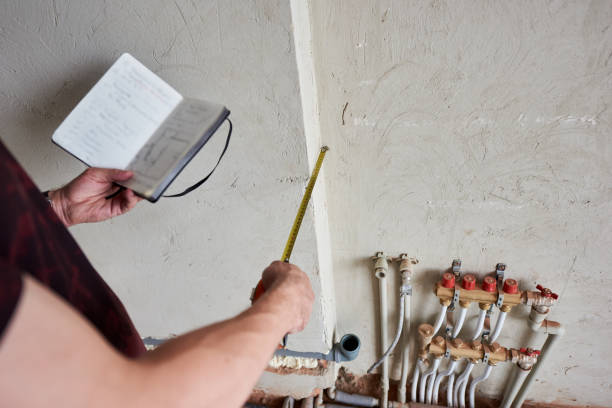
One of the most common issues in Anchor Bolts & Base Plates: Proper Installation and Inspection is anchor bolt misalignment.
Misplaced anchors can prevent column installation and delay project timelines.
Minor misalignment can sometimes be corrected by enlarging base plate holes under engineer approval.
However, excessive deviation may require chemical anchors or post-installed anchoring systems.
Insufficient embedment depth is another critical failure that reduces tensile capacity.
In such cases, retrofit anchoring solutions may be necessary.
Poor grout application can also cause voids beneath the base plate, leading to uneven load distribution.
Understanding failure risks helps contractors implement preventive measures within Anchor Bolts & Base Plates: Proper Installation and Inspection workflows.
Installation Accuracy & Performance Statistics
| Parameter | Recommended Standard | Impact if Ignored |
| Bolt Position Tolerance | ±3–5 mm | Column Misalignment |
| Minimum Embedment Depth | As per structural design | Reduced Pull-Out Capacity |
| Grout Compressive Strength | ≥ 40 MPa (typical) | Load Transfer Failure |
| Bolt Tightening Torque | As per bolt grade | Structural Instability |
| Plumbness Tolerance | Within code limits | Frame Stress & Distortion |
These benchmarks reinforce best practices for Anchor Bolts & Base Plates: Proper Installation and Inspection in steel construction projects.
Frequently Asked Questions (FAQ)
Q1: Why are anchor bolts critical in steel structures?
They transfer structural loads safely from steel columns into concrete foundations.
Q2: What happens if anchor bolts are misplaced?
Columns may not align properly, requiring costly corrective measures or redesign.
Q3: Why is non-shrink grout important?
It prevents shrinkage gaps and ensures continuous load transfer.
Q4: How do you check column alignment after installation?
Using surveying equipment to verify plumbness and position accuracy.
Q5: When should final bolt tightening occur?
After column alignment confirmation and before or after grouting depending on project specifications.
Conclusion
Proper execution of Anchor Bolts & Base Plates: Proper Installation and Inspection is fundamental to the structural integrity of any steel building.
From accurate bolt positioning to professional grouting and final torque verification, every step contributes to long-term safety and performance.
Investing in strict quality control measures minimizes rework, prevents structural failures, and enhances overall project efficiency.
By implementing best practices in Anchor Bolts & Base Plates: Proper Installation and Inspection, contractors and developers can ensure reliable load transfer, structural alignment, and lasting durability for decades.
Related articles:
Roofing Systems for Steel Buildings: Options & How to Choose