Modular Steel Buildings: Benefits, Applications, and Design Flexibility
Unlike traditional construction methods that rely heavily on lengthy on-site assembly and rigid concrete frameworks, modular steel construction offers an adaptable, precision-engineered solution tailored to evolving operational demands.
Modular Steel Buildings: Benefits, Applications, and Design Flexibility
Every component—from structural frames to wall panels—is engineered off-site to support rapid deployment, structural integrity, and long-term utility.
Steel structures have become a primary choice for modular development because of their high strength-to-weight ratio, durability, and inherent flexibility.
Whether expanding a commercial footprint or erecting a multi-purpose industrial warehouse, modular steel buildings provide an efficient structural foundation.
At Euro Steel, our structural solutions are engineered to help businesses meet these requirements through precise fabrication and structural design.
What Are Modular Steel Systems and How Do They Work?
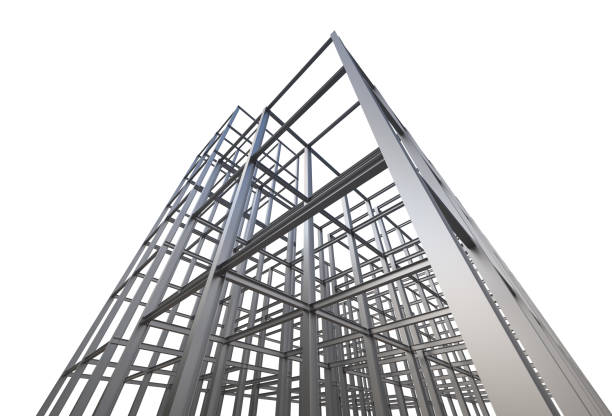
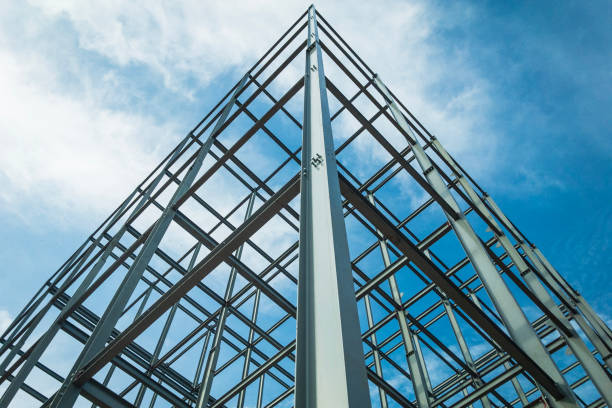
Modular steel systems rely on off-site manufacturing where structural units or components are fabricated in a controlled factory environment before being transported to the construction site for assembly.
What Are Modular Steel Systems and How Do They Work?
What Are Modular Steel Systems and How Do They Work?
These systems generally fall into two primary types:
Volumetric Modular Systems: Three-dimensional modules complete with structural frames, walls, and sub-assemblies manufactured off-site and connected on-site.
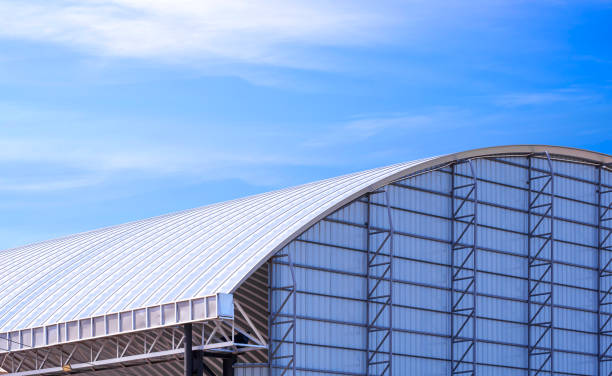
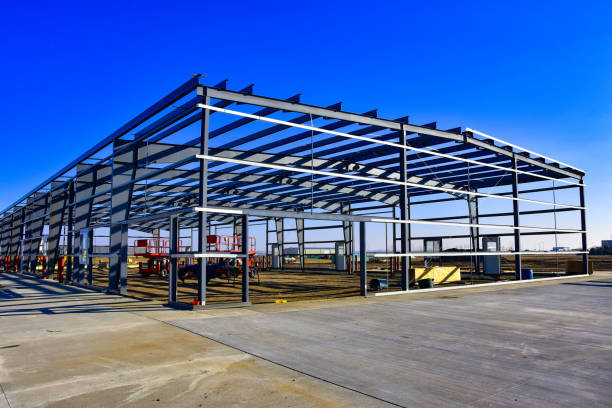
Panelized Steel Systems: Pre-engineered steel panels and framing components brought to the site to assemble clear-span structures, warehouses, and commercial halls.
Because fabrication takes place indoors under strict quality control measures, site preparation and component manufacturing can occur simultaneously.
This parallel workflow minimizes weather delays and streamlines structural assembly.
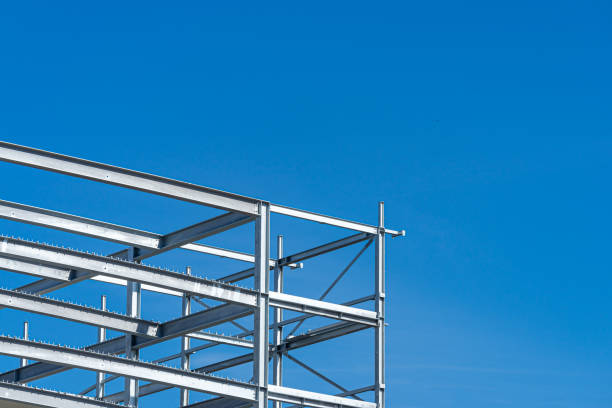
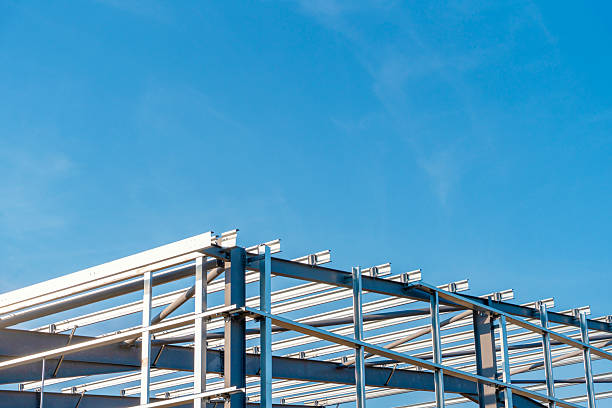
Structural steel’s high dimensional accuracy ensures that connection points, anchor bolts, and frame interfaces align properly during erection.
Key Advantages in Terms of Construction Speed and Cost Efficiency
Time and cost control are major priorities in industrial and commercial development. Modular steel buildings offer distinct operational benefits in both areas.
Key Advantages in Terms of Construction Speed and Cost Efficiency
Key Advantages in Terms of Construction Speed and Cost Efficiency
Accelerated Project Timelines: Off-site fabrication reduces overall construction time compared to traditional brick-or-concrete methods. With factory production occurring alongside foundation work, facilities can be operational significantly faster.
Controlled Construction Costs: Factory-controlled manufacturing reduces material waste, labor overhead, and weather-related site downtime, providing greater budget predictability.
Quality Assurance and Consistency: Pre-engineered steel components are manufactured according to strict structural standards and tolerances, reducing on-site rework and ensuring consistent material performance.
Enhanced Sustainability: Steel is highly recyclable, and the precision of factory cutting minimizes material scrap on the construction site.
Common Industrial and Commercial Applications of Modular Buildings
The adaptability of modular steel makes it suitable across a wide range of sectors.
Common Industrial and Commercial Applications of Modular Buildings
Common Industrial and Commercial Applications of Modular Buildings
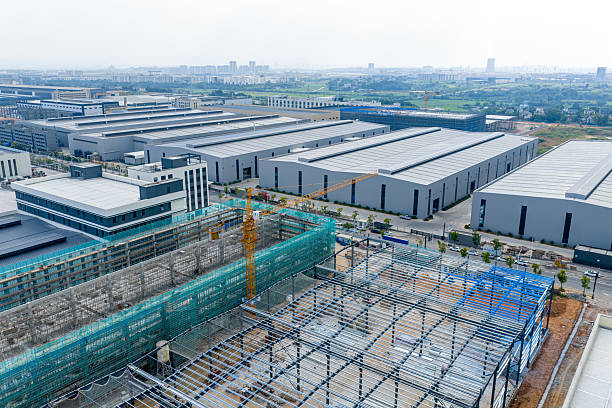
Logistics and Distribution Centers: Provides clear spans and high internal clearance required for inventory storage, racking, and material movement.
Commercial and Retail Complexes: Enables flexible floor plans that can be configured for multi-tenant retail units, offices, or showrooms.
Industrial Warehouses and Workshops: Delivers durable enclosures built to withstand heavy machinery loads, crane operations, and industrial workflows.
Temporary or Relocatable Facilities: Allows structures to be dismantled, relocated, or reconfigured as operational needs change over time.
Future Trends in Flexible Steel Architecture
As building design advances, modular steel architecture continues to incorporate new engineering techniques and digital technologies.
Future Trends in Flexible Steel Architecture
Future Trends in Flexible Steel Architecture
Integration with BIM (Building Information Modeling): Advanced 3D modeling allows engineers, architects, and fabricators to resolve structural clashes digitally before production begins.
Focus on Energy Efficiency and Green Building: Modern modular steel systems increasingly incorporate high-performance insulated sandwich panels, smart HVAC routing, and solar-ready roof designs.
Scalable and Adaptable Frameworks: Future-proof designs focus on standardized connection details that allow facilities to expand vertically or horizontally with minimal structural disruption.
Advanced Protective Coatings: Specialized anti-corrosion treatments and fire-resistant coatings extend structural lifespan even in challenging environments.
The Role of Euro Steel in Modular Steel Building Projects
Successfully deploying a modular steel facility requires close alignment between engineering design, fabrication precision, and site execution.
The Role of Euro Steel in Modular Steel Building Projects
At Euro Steel, we support industrial and commercial projects by providing structural steel solutions engineered around your exact operational needs.
From initial structural planning and precision fabrication to site preparation, our team helps ensure that your building provides long-term stability, structural safety, and functional flexibility.
Conclusion
Modular steel buildings provide a modern framework for industrial and commercial growth. Their combination of construction speed, cost efficiency, structural strength, and design flexibility makes them a practical choice for dynamic business environments.
Choosing the right structural approach involves evaluating site conditions, operational loads, clear-span requirements, and future expansion plans. By pairing smart design with precision-engineered steel, project owners can create durable facilities built to support ongoing operational demands.
Frequently Asked Questions
What are the primary benefits of modular steel buildings?
Modular steel buildings offer faster construction timelines, predictable costs, high structural durability, and the flexibility to expand or reconfigure the internal layout as operational needs evolve.
How does modular steel construction save time compared to traditional methods?
Because structural steel components are fabricated in a factory at the same time foundation work is being completed on-site, site assembly happens much faster, reducing overall project schedules.
Are modular steel buildings suitable for permanent industrial facilities?
Yes. While modular steel structures can be designed for temporary or relocatable use, they are most commonly engineered as permanent, high-durability facilities that meet stringent international building codes.
Can a modular steel structure be expanded in the future?
Yes. Steel frameworks can be designed from the outset with standardized structural connections and column spacing, allowing future horizontal extensions or vertical additions with minimal disruption.
How does Euro Steel support modular building construction?
Euro Steel provides comprehensive steel structure solutions, including structural planning, quality-controlled fabrication, and engineering coordination, ensuring your modular facility is structurally sound and optimized for its intended application.