
Bolted vs Welded Connections: When to Use Each Type?
Bolted vs Welded Connections: When to Use Each Type? is a critical decision in steel construction that balances strength, site conditions, and lifecycle costs for optimal project outcomes.

Engineers and contractors must weigh these options carefully to ensure durability, safety, and efficiency in every structural joint. Bolted vs Welded Connections: When to Use Each Type? directly impacts erection speed, maintenance, and seismic performance across industries.
Understanding Steel Connections: A Quick Overview
Bolted vs Welded Connections: When to Use Each Type? starts with grasping the fundamentals of steel connections that transfer forces between beams, columns, and braces reliably.
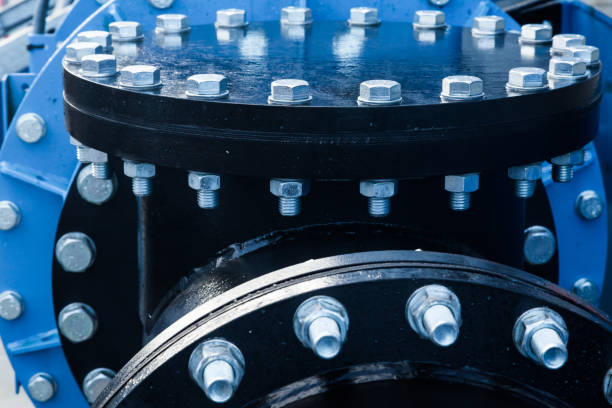
Connections are classified as simple (shear-only, like fin plates), moment-resisting (rigid, for frames), or semi-rigid, per codes such as AISC 360 or Eurocode 3. These joints must resist tension, compression, shear, and torsion while accommodating tolerances and thermal movements.
Steel connections rely on friction, bearing, or fusion to develop strength, with high-strength steels (e.g., ASTM A36, S355) demanding precise detailing.
Bolted joints use mechanical fasteners for clamping, while welded ones fuse metals via heat, each suiting different fabrication and erection scenarios. In Bolted vs Welded Connections: When to Use Each Type?, understanding load paths—axial, flexural, or combined—guides the selection process.
Quality control differs markedly: bolts allow visual inspection and torque checks, welds require NDT like UT or MPI for hidden flaws. Corrosion protection varies too—galvanizing bolts versus painting weld toes.
Modern BIM tools model connections in 3D for clash-free integration, enhancing the Bolted vs Welded Connections: When to Use Each Type? decision-making.
Hybrid connections combine both for versatility, such as bolted shear tabs with welded flanges. Standards evolve with research, emphasizing ductility in seismic zones.
This overview equips stakeholders to navigate Bolted vs Welded Connections: When to Use Each Type? effectively from design through commissioning.
Bolted Connections: Types, Pros, and Common Use Cases
Bolted vs Welded Connections: When to Use Each Type? favors bolted connections for their assembly speed and deconstructability in modular steel frames.
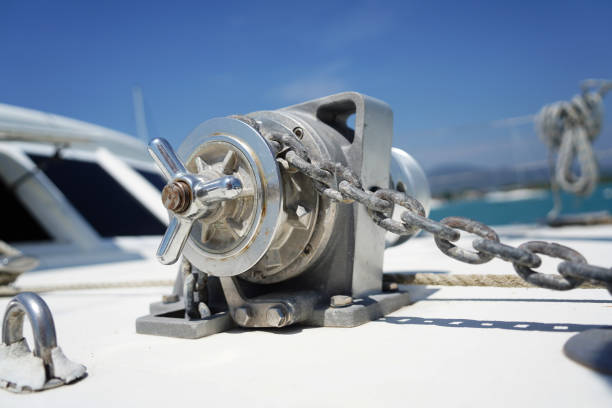
Types include bearing bolts (shear via direct contact, economical for static loads), friction grip (HSFG, pre-tensioned for slip resistance under dynamic forces), and slip-critical (highest safety for bridges). Common bolts are A325 (medium carbon) for general use, A490 (alloy) for fatigue-prone areas, with M20-M30 sizes typical.
Pros encompass field adjustability (up to 3mm misalignment), no hot work risks, and easy retrofits—ideal for phased construction or expansions.
They excel in vibration-heavy environments like cranes or highways, where preloads clamp plates to prevent fretting. In Bolted vs Welded Connections: When to Use Each Type?, pros shine in remote sites, cutting weather delays by 30-50% versus welding.
Use cases span warehouses (seated connections for beams), high-rises (end-plate splices for columns), and temporary bracing (quick bolt-on X-braces).
Black bolts suit low-load interiors; galvanized for outdoors. Detailing follows RCSC specs: min edge distance 1.5d, spacing 2.5d, preventing tear-out.
Fatigue life surpasses welds in cyclic loading, as no heat-affected zones (HAZ) weaken metal. Cost savings accrue from shop prefab and reduced skilled labor on-site. Bolted vs Welded Connections: When to Use Each Type? selects these for sustainability, enabling 90% steel recycling without cutting.
Welded Connections: Types, Pros, and Common Use Cases
Bolted vs Welded Connections: When to Use Each Type? leans toward welded connections for seamless rigidity in moment frames and heavy trusses.
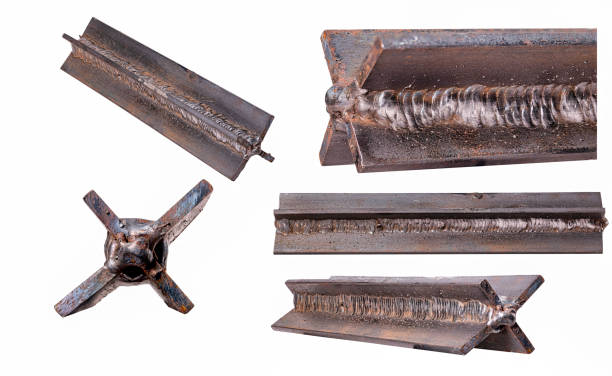
Types include fillet welds (versatile triangles for shear/tension, E70XX electrodes), butt welds (full penetration for tension splices via CJP), and slot/plug for shear keys. SMAW, GMAW, or SAW processes match project scale, with preheat preventing cracks in thick plates.
Pros deliver compact, material-efficient joints with smooth stress flow, minimizing eccentricities in rigid connections. They suit high-fire-resistance needs, as welds maintain integrity up to 1000°C. In Bolted vs Welded Connections: When to Use Each Type?, welding cuts steel volume by 20% in optimized designs, slashing transport costs.
Common use cases include portal frames (shop-welded beams), offshore platforms (hyperbaric welding for corrosion resistance), and seismic cores (ductile fillet welds dissipating energy). Field welding fits tight tolerances (<1mm), perfect for curved or complex geometries. AWS D1.1 governs sizing: throat thickness = 0.707 x leg for fillets.
Strength peaks without slip, ideal for wind turbines or stadium roofs under constant flexure. However, skilled labor and NDT (ultrasonic testing) elevate QA costs. Bolted vs Welded Connections: When to Use Each Type? prioritizes welds for permanence where disassembly isn’t needed.
Cost, Speed, and Quality: Practical Comparison On-Site
Bolted vs Welded Connections: When to Use Each Type? reveals stark on-site contrasts in cost, speed, and quality that dictate project timelines and budgets.
Bolted erection races ahead—snug-tight in hours using impact wrenches, versus welding’s multi-pass days with weather shelters. Speed edge: bolted finishes 2-3x faster, per AISC stats, minimizing crane time (up to $10k/day savings).
Cost breakdown: bolts average $0.50-2/piece plus plates ($5-15/linear m), welding $20-50/m including electrodes/labor. Initial bolted higher (extra steel), but lifecycle lower via no rework—welds hit 10-15% rejection rates on-site. In Bolted vs Welded Connections: When to Use Each Type?, hybrids optimize: bolt shear planes, weld flanges for 15% savings.
Quality metrics favor bolts for inspectability (turn-of-nut method verifies preload), welds risk distortion/cracks needing grinding (5-10% thickness loss). On-site variables like wind chill welds but ignore bolts; seismic codes prefer bolted ductility (AISC 341). Quality control: torque wrenches vs. holiday detectors for coatings.
Speed scales with crew: 10-man bolted team does 100t/day, welded halves that. Cost volatility ties to steel prices—bolts buffer fluctuations better. Bolted vs Welded Connections: When to Use Each Type? picks per context: bolted for fast-track, welded for bespoke precision.
Typical Mistakes in Connections (and How to Avoid Them
Bolted vs Welded Connections: When to Use Each Type? uncovers common pitfalls that compromise safety and inflate costs if unchecked during detailing.
Mistake #1: Undersized bolts ignoring combined shear/tension—avoid via LRFD interaction equations (Ru/φRn ≤1.0), using IDEA StatiCa for FEA checks. #2: Inadequate edge distances causing tear-out; mandate 1.5-2d min per AISC Table J3.4.
Weld mistakes include incomplete fusion from low heat input—prevent with WPS qualification and 100% visual/UT on critical joints. Distortion warps frames; counter via balanced welding sequences and strongbacks.
In Bolted vs Welded Connections: When to Use Each Type?, overlooking slip-critical specs on friction bolts risks fretting—specify pretensioned per RCSC.
Hybrid errors: mismatched stiffness causing rotation—model in 3D software like Tekla. Corrosion neglect: ungalvanized bolts in humid zones pit fast; hot-dip all per ASTM A153.
Fatigue oversight in dynamic apps—use filler plates or extended ends.
Avoidance strategies: peer reviews, mock-ups for complex nodes, and RFID-tracked bolts ensuring grade compliance. Training reduces human error 40%. Bolted vs Welded Connections: When to Use Each Type? succeeds by proactive detailing, turning potential failures into robust assets.
Bolted vs Welded Connections: When to Use Each Type? equips projects for success through informed choices tailored to demands. Bolted vs Welded Connections: When to Use Each Type? ultimately hinges on site realities, delivering enduring steel structures.
Frequently Asked Questions (FAQ)
When to choose bolted over welded in Bolted vs Welded Connections: When to Use Each Type??
Opt for bolted in field assembly, seismic areas, or expansions needing ductility and speed.
What are main types of bolted connections?
Bearing, friction grip (HSFG), and slip-critical, selected by load type and fatigue risk.
Why use welded connections despite higher on-site time?
For rigid moment transfer, material efficiency, and seamless geometry in shop fabrication.
How does cost compare in Bolted vs Welded Connections: When to Use Each Type??
Bolted cheaper long-term via speed; welded saves steel but needs skilled QA.
What common mistake sinks connections?
Ignoring edge distances or fusion—avoid with code tables and NDT protocols.
Related articles:
Quality Control in Steel Fabrication: Inspection Checklist & Standards