
Steel Buildings for Cold Storage Facilities: Structural Considerations
Cold storage facilities require specialized building systems designed to maintain controlled internal temperatures while protecting stored products from external environmental conditions.
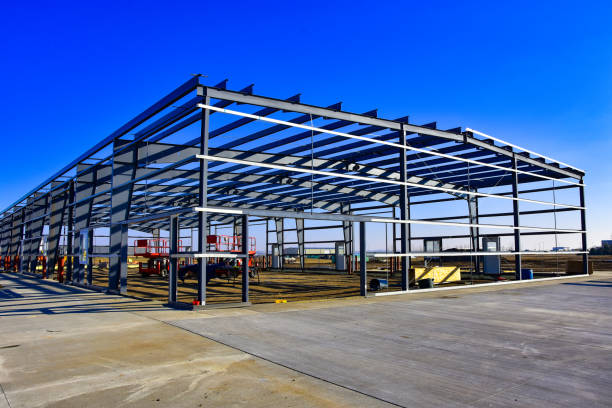
Unlike conventional warehouses, cold storage buildings must accommodate insulation systems, refrigeration equipment, vapor barriers, specialized floors, and operational requirements that can significantly influence structural design.
Steel buildings are widely suitable for cold storage applications because they can provide large clear spans, flexible layouts, high internal spaces, and efficient structural systems. However, successful cold storage construction requires close coordination between structural engineering, insulation, refrigeration systems, foundations, and the building envelope.
Understanding these structural considerations during the early design stage can help create a facility that is durable, efficient, and suitable for long-term cold storage operations.
What Makes Cold Storage Buildings Different?
A cold storage facility is more than a standard warehouse with additional insulation.
The building must maintain controlled internal conditions while dealing with temperature differences between the interior and exterior. This creates additional requirements for the structure and building envelope.
Cold storage facilities may include:
- Refrigerated storage areas
- Freezer rooms
- Loading zones
- Temperature-controlled processing areas
- Refrigeration equipment rooms
- Insulated wall and roof systems
- Specialized floor systems
- Airlocks and temperature transition areas
The exact requirements depend on the products being stored and the required operating temperature.
Steel Structures for Large Clear Spaces
Large clear spaces are particularly useful in cold storage facilities because storage systems and material-handling equipment often require unobstructed internal areas.
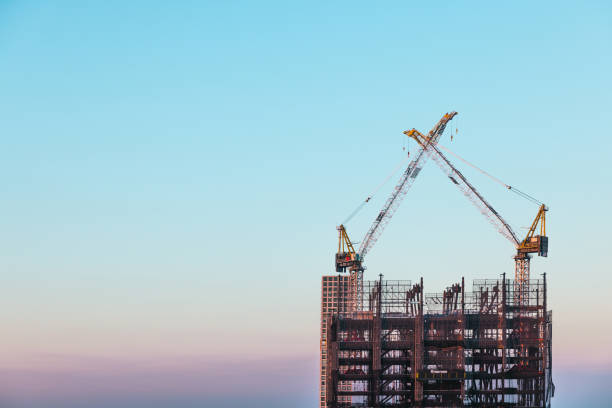
Steel frames can provide large spans while reducing the need for internal columns.
This can support:
- High-density storage
- Racking systems
- Forklift movement
- Automated storage equipment
- Conveyor systems
- Flexible internal layouts
The structural grid should be developed around the storage and operational requirements rather than being selected independently from the warehouse layout.
Structural Loads in Cold Storage Facilities
Cold storage buildings can experience a variety of structural loads.
Engineers may need to consider:
- Dead loads
- Roof loads
- Wind loads
- Seismic loads where applicable
- Storage rack loads
- Refrigeration equipment
- Suspended services
- Maintenance loads
- Equipment platforms
The loading requirements can become more demanding when high-density storage systems or automated equipment are used.
Refrigeration units, ventilation systems, pipes, cable trays, lighting, and other services may also require structural supports.
These loads should be identified early so that the primary and secondary steel systems can be designed appropriately.
High-Bay Storage and Internal Clear Height
Many cold storage facilities use high-bay racking to maximize storage capacity because maintaining a large controlled environment can make efficient use of floor space particularly important.
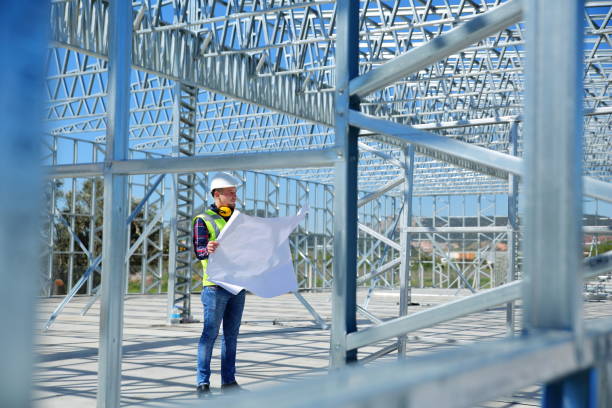
The required clear height depends on:
- Storage rack height
- Forklift requirements
- Automated systems
- Refrigeration equipment
- Fire protection systems
- Lighting
- Ventilation
- Maintenance access
Steel structures can accommodate significant internal heights while maintaining efficient framing systems.
However, increasing building height can also affect wind loads, structural member sizes, foundations, and construction requirements. The complete system should therefore be evaluated during design.
Insulated Building Envelopes
The building envelope plays a critical role in cold storage performance.
Insulated wall and roof systems help limit heat transfer between the controlled interior and the external environment.
Typical components may include:
- Insulated panels
- Vapor barriers
- Sealed joints
- Insulated doors
- Roof insulation
- Wall insulation
The steel structure must be coordinated with these systems to ensure that structural connections and penetrations do not compromise the thermal envelope.
Even small gaps or poorly detailed penetrations can affect the building’s thermal performance.
Vapor Barriers and Moisture Control
Moisture control is especially important in refrigerated buildings.
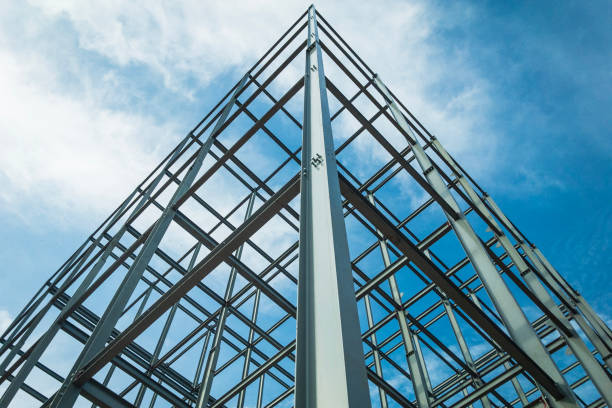
Temperature differences can create condensation risks if vapor barriers and insulation are not properly designed.
Moisture infiltration can contribute to:
- Condensation
- Insulation degradation
- Corrosion
- Ice formation
- Reduced thermal performance
- Building maintenance problems
Structural penetrations, joints, openings, and connections should therefore be coordinated with the vapor control strategy.
The building envelope must maintain continuity around doors, services, structural interfaces, and equipment supports.
Steel Protection in Low-Temperature Environments
Steel structures used in cold storage facilities require appropriate material selection and protection.
The environmental conditions inside and outside the facility can be significantly different, and moisture may become a concern around temperature transition areas.
Potential risk areas include:
- Door openings
- Loading docks
- Service penetrations
- Condensation zones
- Refrigeration equipment areas
- Areas with poor drainage
Appropriate coatings, detailing, inspection, and maintenance can help protect steel components from corrosion.
The protection system should be selected according to the actual environmental exposure rather than relying on a generic approach.
Foundation and Floor Considerations
The foundation and floor system require particular attention in cold storage facilities.
Temperature-controlled environments can create conditions that differ significantly from those of conventional warehouses.
Floor systems may need to accommodate:
- Heavy storage racks
- Forklifts
- Automated equipment
- Thermal insulation
- Vapor barriers
- Refrigeration requirements
In freezer facilities, floor insulation can be especially important because heat transfer through the floor can affect the operation of the facility.
Foundation and floor design should therefore be coordinated with the thermal and operational requirements of the building.
Refrigeration Equipment and Structural Coordination
Refrigeration systems can introduce significant equipment and service requirements.
Large refrigeration units may be installed on roofs, platforms, or dedicated equipment areas.
The structural design may need to accommodate:
- Equipment weight
- Vibration
- Maintenance access
- Pipe supports
- Ducts
- Electrical systems
- Service platforms
Equipment locations should be established before the final structural design whenever possible.
This allows engineers to provide appropriate supports without requiring significant structural modifications later.
Loading Docks and Temperature Control
Loading and unloading areas can be particularly challenging in cold storage facilities because frequent door openings can allow warm air to enter controlled areas.
The building layout may therefore include:
- Loading docks
- Airlocks
- Insulated doors
- Temperature transition zones
- Sealed loading areas
From a structural perspective, these areas may require large openings and additional framing around doors.
The structural design should accommodate these openings while maintaining the required strength and stability of the frame.
Structural Design for Automated Storage Systems
Modern cold storage facilities increasingly use automated storage and retrieval systems.
Automation can improve storage density and reduce the amount of manual handling required in low-temperature environments.
However, automated systems can introduce specific structural requirements, including:
- Equipment support
- Rail systems
- Conveyor supports
- Service platforms
- Increased storage heights
- Specialized floor tolerances
The structural frame and floor system should be coordinated with automation requirements before construction begins.
Fire Safety in Cold Storage Buildings
Fire safety remains an important consideration even though the internal environment is temperature-controlled.
The appropriate fire protection system depends on the stored materials, building configuration, storage height, occupancy, and applicable regulations.
Design may need to address:
- Fire detection
- Emergency exits
- Fire-rated assemblies
- Sprinkler systems
- Emergency access
- Fire-resistant structural elements
Insulated panels and other building envelope components may also have specific fire performance requirements.
Fire protection should be coordinated with the structural and mechanical systems from the beginning.
Structural Movement and Temperature Changes
Temperature differences can influence building components and connections.
Cold storage facilities may contain areas with different operating temperatures, particularly around loading docks, processing areas, and refrigerated rooms.
Engineers should consider how temperature changes may affect:
- Structural members
- Connections
- Insulated panels
- Joints
- Doors
- Service penetrations
Proper detailing can help accommodate expected movement and reduce the risk of damage to the building envelope.
Roof Design for Cold Storage Facilities
Roof systems in cold storage facilities must perform both structural and thermal functions.
The roof may need to accommodate:
- Insulation
- Vapor control layers
- Refrigeration equipment
- Ventilation
- Drainage
- Maintenance access
- Solar installations where applicable
Roof drainage should be carefully designed to prevent water accumulation.
Equipment mounted on the roof should also be considered during structural analysis so that additional loads and support requirements are properly addressed.
Designing for Maintenance and Access
Cold storage facilities can be difficult environments for maintenance personnel.
Equipment and structural components should therefore be accessible for inspection and repair without unnecessarily disrupting operations.
Maintenance planning may include:
- Equipment access
- Roof access
- Inspection routes
- Service platforms
- Structural connection inspection
- Drainage maintenance
- Corrosion inspection
Designing for maintenance from the beginning can improve the long-term reliability of the facility.
Energy Efficiency and Structural Coordination
Energy efficiency is particularly important for cold storage because refrigeration systems can operate continuously.
The structural system should be coordinated with energy-efficient building envelope solutions.
Important factors include:
- Insulation thickness
- Air leakage control
- Vapor barriers
- Door performance
- Roof design
- Building orientation
- Equipment placement
While the steel frame itself does not control the building’s energy consumption, its geometry and coordination with the envelope can influence the overall performance of the facility.
Construction Quality and Steel Fabrication
Cold storage facilities require accurate construction because gaps, misalignment, or poorly installed connections can affect the building envelope.
Steel fabrication should include appropriate quality control for:
- Member dimensions
- Connection locations
- Welding
- Bolting
- Surface preparation
- Protective coatings
- Component identification
Accurate fabrication helps ensure that insulated panels and other systems can be installed correctly around the structural frame.
The Role of Euro Steel in Cold Storage Projects
Cold storage construction requires coordination between structural engineering, steel fabrication, building envelope systems, refrigeration equipment, and site installation.
Euro Steel can support steel structure projects by developing structural solutions according to the specific requirements of cold storage facilities.
The structural system can be coordinated with clear spans, high-bay storage, equipment supports, loading areas, roof systems, and future operational requirements.
Through proper engineering, fabrication, quality control, and installation planning, the steel frame can provide a reliable foundation for temperature-controlled storage facilities.
Conclusion
Steel buildings can provide an effective structural solution for cold storage facilities, but their design requires more coordination than a conventional warehouse.
Clear spans, high storage requirements, equipment loads, insulated envelopes, vapor barriers, specialized floors, refrigeration systems, loading areas, and fire protection all influence the structural design.
The most successful projects consider these requirements from the beginning rather than treating them as separate systems.
By coordinating structural engineering with insulation, refrigeration, storage systems, fabrication, and installation, a steel cold storage facility can achieve the strength, stability, durability, and operational efficiency required for long-term use.
Frequently Asked Questions
Why are steel structures suitable for cold storage facilities?
Steel structures can provide large clear spans, high internal spaces, flexible layouts, and the ability to support storage systems and refrigeration equipment.
What makes cold storage buildings different from conventional warehouses?
Cold storage facilities require controlled internal temperatures and therefore need specialized insulation, vapor barriers, refrigeration systems, doors, floors, and building envelope details.
Does refrigeration equipment affect structural design?
Yes. Refrigeration equipment can introduce additional loads and may require dedicated supports, platforms, roof structures, or service access.
Why is vapor control important in cold storage buildings?
Vapor control helps reduce condensation and moisture movement through the insulated building envelope. Poor moisture control can affect insulation performance and contribute to corrosion or other maintenance problems.
Can steel structures support high-bay cold storage?
Yes. Steel frames can be designed for high internal clear heights and large storage systems, provided the structural and operational requirements are properly coordinated.
Does the floor require special design in freezer facilities?
Yes. Freezer facilities may require specialized floor insulation, vapor barriers, and structural capacity for heavy storage and material-handling equipment.
How can steel structures be protected from corrosion in cold storage facilities?
Appropriate protective coatings, surface preparation, moisture control, drainage, inspection, and maintenance can help protect steel components from corrosion.
What role does Euro Steel play in cold storage construction?
Euro Steel can support structural steel projects through engineering coordination, fabrication, quality control, and installation planning tailored to the requirements of cold storage facilities.