
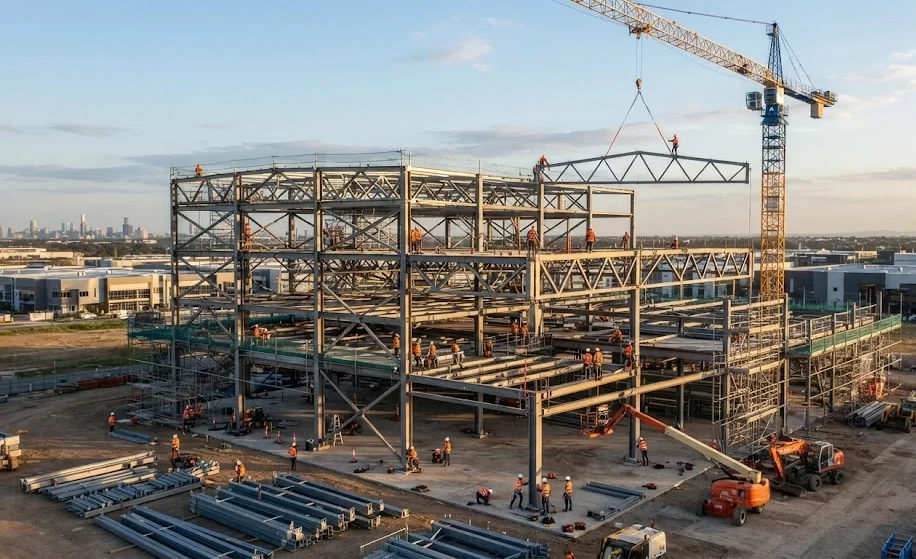
As steel structures continue to replace traditional construction methods due to their durability, speed, and sustainability, proper installation has become more important than ever. Every bolt, beam, column, and connection must be installed according to engineering specifications to ensure structural integrity and compliance with international standards.
In this comprehensive guide, we’ll explore the complete Steel Building Installation process, the major construction stages, common challenges, safety requirements, and best practices that guarantee successful project execution.
What is Steel Building Installation?
Steel Building Installation refers to the process of assembling fabricated structural steel components on-site according to approved engineering drawings. Unlike traditional concrete construction, most steel components are manufactured in controlled factory environments before being transported to the project site for erection.
This construction approach significantly reduces project timelines while improving quality control and minimizing material waste.
A typical steel building consists of:
- Primary steel frames
- Steel columns
- Rafters
- Roof purlins
- Wall girts
- Bracing systems
- Roof and wall cladding
- Fasteners and anchor bolts
- Secondary structural members
The installation phase transforms these individual components into a fully operational building capable of serving industrial, commercial, or residential purposes.
How Steel Structures Are Revolutionizing Modern Industrial Construction
Why Professional Steel Building Installation Matters
Even perfectly fabricated steel components can fail if they are installed incorrectly.
Professional installation ensures:
- Structural stability
- Worker safety
- Accurate alignment
- Proper load distribution
- Weather resistance
- Compliance with engineering standards
- Long-term durability
- Reduced maintenance costs
Installation errors may lead to costly repairs, delays, structural movement, or even complete project failure.
read also:Best Industrial Shed Designs Inspired by Kirby Building Systems
Pre-Installation Planning
Successful Steel Building Installation begins long before cranes arrive on-site.
Proper planning includes:
Engineering Review
Project engineers carefully review:
- Structural drawings
- Connection details
- Foundation layouts
- Bolt schedules
- Erection sequences
- Crane locations
Every installation activity must follow approved engineering documentation.
Site Preparation
Before installation starts, the construction site must be prepared by:
- Leveling the ground
- Completing concrete foundations
- Verifying anchor bolt positions
- Preparing crane access
- Establishing safety zones
- Organizing material storage
Proper site preparation minimizes installation delays.
Material Inspection
Each steel component is inspected for:
- Dimensions
- Surface damage
- Protective coatings
- Identification marks
- Shipping damage
- Missing accessories
Only approved materials should proceed to installation.
Step-by-Step Steel Building Installation Process
1. Foundation Verification
The installation team first checks:
- Foundation elevations
- Anchor bolt locations
- Concrete strength
- Base plate alignment
- Foundation dimensions
Small foundation errors can create major alignment problems later.
2. Column Installation
Steel columns form the backbone of every structure.
The installation crew:
- Lifts each column using cranes
- Places it on anchor bolts
- Installs temporary bolts
- Checks vertical alignment
- Uses temporary bracing
Columns remain temporarily supported until the main frame is completed.
3. Main Frame Assembly
After columns are secured, rafters are lifted into position.
This stage involves:
- Connecting rafters
- Installing rigid frame joints
- Tightening structural bolts
- Verifying geometry
- Temporary stabilization
Large industrial projects often use heavy-duty cranes for this operation.
4. Installing Bracing Systems
Bracing provides lateral stability.
Common types include:
- Cross bracing
- Rod bracing
- Portal bracing
- Roof bracing
- Wind bracing
Without proper bracing, the structure cannot safely resist wind or seismic loads.
5. Installing Secondary Steel Members
Once the primary frame is stable, installers add:
- Roof purlins
- Wall girts
- Eave struts
- Sag rods
These components support roof and wall panels.
6. Roof Installation
Roof panels are carefully positioned and secured.
Installation includes:
- Roof insulation
- Waterproof membranes
- Metal roof sheets
- Ridge caps
- Flashings
- Fasteners
Proper sealing prevents future water leakage.
7. Wall Cladding Installation
Exterior wall systems improve:
- Building appearance
- Thermal performance
- Weather resistance
- Energy efficiency
Wall installation must follow precise alignment procedures to ensure a professional finish.
8. Doors, Windows, and Accessories
The final stage includes:
- Industrial doors
- Personnel doors
- Windows
- Skylights
- Gutters
- Downpipes
- Ventilation systems
These elements complete the building envelope.
Equipment Used During Steel Building Installation
Modern installation projects rely on specialized equipment.
Typical machinery includes:
- Mobile cranes
- Tower cranes
- Boom lifts
- Scissor lifts
- Telehandlers
- Torque wrenches
- Laser alignment systems
- Welding equipment
Choosing the right equipment improves productivity while reducing installation risks.
Safety During Steel Building Installation
Safety remains the highest priority on every steel construction project.
Key safety practices include:
Personal Protective Equipment
Workers should wear:
- Safety helmets
- Harnesses
- Safety boots
- High-visibility clothing
- Protective gloves
- Eye protection
Working at Height
Fall protection systems include:
- Lifelines
- Guardrails
- Safety nets
- Anchor points
Crane Safety
Proper crane operation requires:
- Qualified operators
- Load calculations
- Wind monitoring
- Communication protocols
- Regular inspections
A strong safety culture significantly reduces workplace accidents.
Common Challenges During Steel Building Installation
Although steel construction is highly efficient, several challenges may arise.
Weather Conditions
Strong winds can delay lifting operations.
Heavy rain may affect:
- Worker safety
- Equipment movement
- Material handling
Foundation Errors
Incorrect anchor bolt placement often requires corrective work before installation can continue.
Material Damage
Transportation may cause:
- Bent members
- Damaged coatings
- Missing bolts
- Surface scratches
Routine inspections help identify problems early.
Scheduling Delays
Late material delivery or equipment shortages can impact project timelines.
Proper project management minimizes these risks.
Advantages of Steel Building Installation
Steel buildings continue gaining popularity because installation offers numerous benefits.
Faster Construction
Factory-fabricated components reduce on-site labor and accelerate project completion.
Many steel buildings can be erected in weeks rather than months.
Higher Quality
Controlled manufacturing environments produce consistent, precision-engineered components.
Reduced Labor Costs
Shorter installation schedules lower labor expenses and equipment rental costs.
Sustainability
Steel is one of the world’s most recyclable construction materials.
Modern steel projects generate significantly less construction waste.
Flexibility
Steel structures can accommodate:
- Large open spaces
- Future expansion
- Heavy equipment
- Customized layouts
Quality Control During Installation
Every stage should undergo strict quality inspection.
Quality checks include:
- Bolt torque verification
- Weld inspection
- Structural alignment
- Coating inspection
- Dimensional accuracy
- Connection verification
Inspection records provide valuable documentation throughout the project lifecycle.
Choosing the Right Steel Building Installation Contractor
The contractor plays a major role in project success.
When selecting an installation partner, consider:
- Industry experience
- Engineering expertise
- Qualified installation teams
- Safety performance
- Equipment availability
- Quality certifications
- Previous projects
- Project management capabilities
An experienced contractor minimizes construction risks while delivering reliable results.
Maintenance After Steel Building Installation
Proper maintenance extends the service life of steel buildings.
Recommended maintenance includes:
- Annual structural inspections
- Bolt tightening checks
- Roof inspections
- Drainage cleaning
- Corrosion monitoring
- Protective coating maintenance
Preventive maintenance helps avoid expensive repairs in the future.
The Future of Steel Building Installation
Technology continues transforming steel construction.
Emerging innovations include:
- Building Information Modeling (BIM)
- Drone site inspections
- Digital project management
- AI-assisted scheduling
- Automated surveying
- Smart lifting equipment
- Robotics for steel assembly
These technologies improve installation accuracy while reducing project costs and construction time.
Conclusion
Steel Building Installation is far more than assembling steel components. It is a carefully engineered process that demands planning, precision, skilled professionals, and strict adherence to safety and quality standards.
From foundation verification and structural frame erection to roof installation and final inspections, every phase contributes to the strength, durability, and efficiency of the completed building.
As industries increasingly demand faster construction, sustainable materials, and cost-effective solutions, steel buildings continue to lead the future of modern construction. Partnering with experienced engineering and installation specialists ensures every project achieves the highest levels of performance, reliability, and long-term value.
Whether developing warehouses, industrial plants, logistics centers, commercial facilities, or pre-engineered buildings, investing in professional Steel Building Installation is the foundation of a successful construction project.