

Client Checklist Before Starting a Steel Building Project (Free Scope Template)
Starting a steel building project without a clear scope can lead to budget overruns, design revisions, and costly delays.

That is why using a structured Client Checklist Before Starting a Steel Building Project (Free Scope Template) is essential for ensuring clarity, accuracy, and smooth project execution.
Whether you are planning a warehouse, factory, logistics hub, or cold storage facility, early-stage planning determines overall success.
A well-prepared Client Checklist Before Starting a Steel Building Project (Free Scope Template) helps align expectations between client, consultant, and contractor while minimizing change orders.
From defining project dimensions to preparing an accurate RFQ package, this guide walks you through everything you must prepare before engaging a steel structure supplier.
By following this Client Checklist Before Starting a Steel Building Project (Free Scope Template), you position your project for efficiency, transparency, and cost control from day one.
Defining the Project Scope: Use, Size, and Future Expansion
Defining the Project Scope: Use, Size, and Future Expansion

The first step in any Client Checklist Before Starting a Steel Building Project (Free Scope Template) is defining the exact purpose of the building.
Is it for warehousing, manufacturing, logistics, retail, or cold storage?
The intended use directly impacts structural design loads, internal layout, and mechanical requirements.
Project size must be clearly defined, including width, length, eave height, and number of bays. Clear height requirements should consider equipment, racking systems, or cranes.
Future expansion is another critical factor often overlooked.
Planning for expansion joints or extendable frames can significantly reduce future modification costs.
Operational workflow should also influence structural grid spacing and door placement.
By clearly defining scope parameters, the Client Checklist Before Starting a Steel Building Project (Free Scope Template) ensures your building is designed for both current and future needs.
Site Data Needed: Soil, Location, Wind, and Seismic Inputs
Site Data Needed: Soil, Location, Wind, and Seismic Inputs

Accurate site information is essential within the Client Checklist Before Starting a Steel Building Project (Free Scope Template).
Soil investigation reports determine foundation type, bearing capacity, and settlement risks.
Geographical location affects wind loads, snow loads, and seismic design requirements.
Without correct environmental inputs, structural calculations may be inaccurate or non-compliant.
Wind speed data influences frame sizing, bracing systems, and cladding fastening design. In seismic zones, ductility and connection detailing become more critical.
Local building codes must also be considered to ensure permit approval.
Providing complete site data in the Client Checklist Before Starting a Steel Building Project (Free Scope Template) allows engineers to deliver safe and optimized structural solutions.
Functional Requirements: Doors, Loading Bays, Offices, Mezzanines
Functional Requirements: Doors, Loading Bays, Offices, Mezzanines
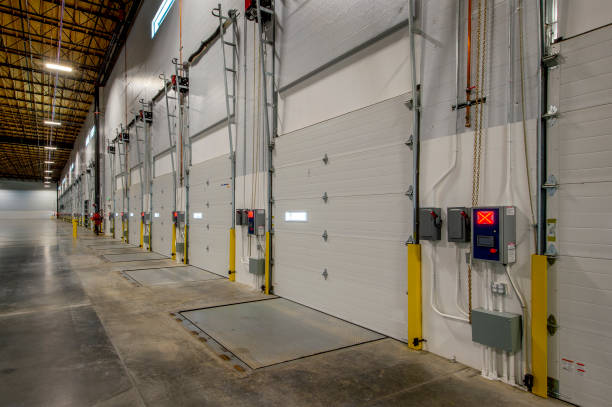
A comprehensive Client Checklist Before Starting a Steel Building Project (Free Scope Template) must include detailed functional requirements.
Door types (sliding, sectional, high-speed), door sizes, and quantities directly affect structural openings.
Loading bays require dock levelers, shelters, and adequate maneuvering space. Incorrect planning can disrupt logistics efficiency.
Internal office spaces or mezzanine floors require additional structural reinforcement and load considerations.
Mechanical equipment platforms and staircases should also be identified early to avoid costly structural revisions.
Clearly defining operational elements strengthens the effectiveness of your Client Checklist Before Starting a Steel Building Project (Free Scope Template).
Finishes and Options: Insulation, Cladding, Roofing, and Accessories
Finishes and Options: Insulation, Cladding, Roofing, and Accessories

Material specifications are a major cost driver in the Client Checklist Before Starting a Steel Building Project (Free Scope Template).
Insulation type and thickness impact thermal performance and energy efficiency.
Cladding options may include single-skin sheets, insulated sandwich panels, or architectural finishes.
Roofing systems should be selected based on climate, drainage design, and waterproofing performance.
Accessories such as skylights, ridge vents, canopies, and louvers should be defined in advance.
Fireproofing, corrosion protection, and coating systems must also be specified depending on environmental exposure.
Defining finishes early ensures accurate budgeting within your Client Checklist Before Starting a Steel Building Project (Free Scope Template).
RFQ Package Checklist: What to Send for Accurate Quotation
RFQ Package Checklist: What to Send for Accurate Quotation

A complete RFQ submission is one of the most important components of the Client Checklist Before Starting a Steel Building Project (Free Scope Template).
Incomplete information leads to inaccurate pricing and future disputes.
Your RFQ package should include architectural drawings, site data, design criteria, functional requirements, and material preferences.
Clearly state the project timeline and delivery expectations. Indicate whether the scope includes supply only or supply and installation.
Specify local code requirements and certification standards.
Providing a detailed RFQ ensures competitive, transparent pricing aligned with your Client Checklist Before Starting a Steel Building Project (Free Scope Template) objectives.
Pre-Project Planning Impact Overview
| Planning Element | Why It Matters | Risk If Missing |
| Defined Building Dimensions | Accurate Structural Design | Costly Redesign |
| Soil Report | Proper Foundation Design | Settlement Issues |
| Wind & Seismic Data | Code Compliance | Safety Risk |
| Functional Layout | Operational Efficiency | Workflow Disruption |
| Complete RFQ Package | Accurate Pricing | Budget Overrun |
This table highlights how following a Client Checklist Before Starting a Steel Building Project (Free Scope Template) reduces uncertainty and financial risk.
Frequently Asked Questions (FAQ)
Q1: Why is defining project scope so important before requesting a quotation?
Because unclear scope leads to inaccurate pricing and potential contract variations.
Q2: Do I need a soil report before contacting a steel building supplier?
Yes, foundation design depends heavily on soil bearing capacity.
Q3: Can I modify the building design after signing the contract?
Yes, but changes may result in additional costs and schedule delays.
Q4: What is the biggest mistake clients make before starting a steel project?
Providing incomplete technical information in the RFQ stage.
Q5: How does early planning reduce total project cost?
It minimizes redesign, prevents change orders, and improves procurement efficiency.
Conclusion
Careful preparation is the foundation of every successful steel building project. By following a structured Client Checklist Before Starting a Steel Building Project (Free Scope Template), you ensure clarity, efficiency, and cost control from the earliest stages.
Clear scope definition, accurate site data, functional detailing, and complete RFQ documentation significantly reduce project risk.
Using a professional Client Checklist Before Starting a Steel Building Project (Free Scope Template) empowers clients to make informed decisions, secure accurate pricing, and achieve smooth project execution from design to handover.
Related articles: