
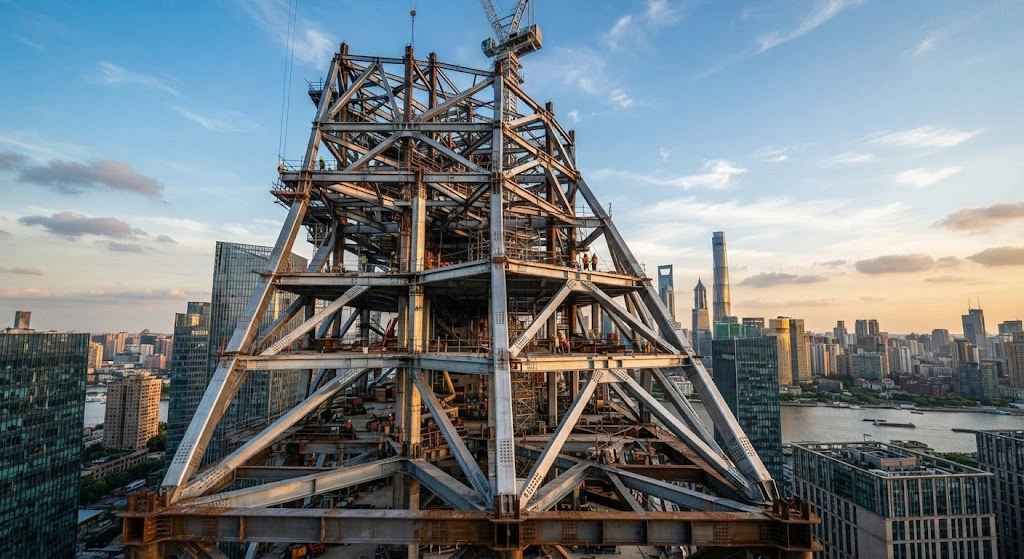
As construction demands continue to evolve, developers and engineers are looking for building solutions that reduce construction time, improve structural performance, and lower maintenance costs. Steel Structures successfully meet these requirements while also supporting sustainable construction practices and efficient project management.
Unlike traditional concrete construction, steel offers exceptional load-bearing capacity with significantly lower structural weight. This unique combination allows architects greater freedom in design while enabling contractors to complete projects faster and more efficiently.
At Euro Steel International, advanced engineering, precision manufacturing, and professional installation services ensure that every steel project meets international quality standards while delivering exceptional performance throughout its lifecycle. The company’s integrated approach covers engineering, fabrication, supply, and erection, providing clients with complete turnkey solutions for projects of every size. This comprehensive model reflects the company’s focus on quality, innovation, and customer satisfaction.
read also:Best Industrial Shed Designs Inspired by Kirby Building Systems
What Are Steel Structures?
Steel Structures are construction systems in which the primary load-bearing framework consists of structural steel members such as columns, beams, trusses, rafters, and bracing systems. These components work together to distribute loads safely while maintaining excellent stability and durability.
Modern steel structures are manufactured with high precision using advanced fabrication technologies that ensure consistent quality and dimensional accuracy. Each component is produced according to detailed engineering drawings before being transported to the project site for assembly.
This method offers several advantages over conventional construction, including faster installation, reduced material waste, improved quality control, and enhanced project scheduling.
Why Steel Structures Are Becoming the Industry Standard
The global construction industry increasingly favors Steel Structures because they offer an ideal balance between performance and cost-effectiveness.
Exceptional Strength
Steel possesses one of the highest strength-to-weight ratios among construction materials. This allows engineers to design larger spans with fewer supporting columns, creating open interior spaces suitable for factories, warehouses, sports facilities, and commercial buildings.
Faster Construction
Since most steel components are fabricated off-site, construction activities on-site become significantly shorter. Once foundations are completed, structural members arrive ready for assembly, allowing projects to progress rapidly regardless of building size.
Shorter construction schedules reduce labor expenses, equipment rental costs, and project financing periods.
Superior Quality Control
Factory fabrication enables strict quality inspections during every manufacturing stage. Components are produced under controlled conditions, minimizing errors that often occur with traditional on-site construction.
Design Flexibility
Architects appreciate Steel Structures because they allow innovative architectural designs without sacrificing structural integrity. Long clear spans, curved roofs, mezzanine floors, and future building expansions become much easier to achieve.
Main Components of Steel Structures
Every steel building consists of several critical structural elements that work together to ensure safety and performance.
Primary Framing
Primary framing includes:
- Steel columns
- Main rafters
- Primary beams
- Portal frames
These members carry the majority of structural loads.
Secondary Framing
Secondary framing distributes roof and wall loads while supporting external cladding.
Typical secondary members include:
- Purlins
- Girts
- Eave struts
- Sag rods
Bracing Systems
Bracing improves structural stability by resisting wind forces, seismic loads, and lateral movement.
Common systems include:
- Cross bracing
- Portal bracing
- Roof bracing
- Longitudinal bracing
Roof and Wall Systems
Modern Steel Structures often incorporate insulated sandwich panels or metal cladding systems that improve thermal performance while protecting the building envelope.
Applications of Steel Structures
Steel Structures are used across nearly every construction sector.
Industrial Facilities
Factories require large open production areas capable of supporting heavy equipment and overhead cranes. Steel provides the strength necessary for demanding industrial environments.
Warehouses
Distribution centers depend on wide clear spans that maximize storage capacity and forklift movement. Steel frames eliminate unnecessary interior columns, improving operational efficiency.
Commercial Buildings
Shopping centers, office complexes, exhibition halls, and retail facilities benefit from steel’s flexibility, allowing attractive architectural designs while reducing construction schedules.
Agricultural Buildings
Steel Structures are commonly used for barns, grain storage, livestock shelters, and equipment facilities because they resist harsh environmental conditions while requiring minimal maintenance.
Sports Facilities
Indoor stadiums, gymnasiums, and arenas often utilize steel framing to create expansive column-free spaces capable of accommodating thousands of visitors.
The Role of Pre-Engineered Buildings (PEB)
Pre-Engineered Buildings represent one of the most efficient forms of Steel Structures.
Rather than designing every member individually on-site, engineers optimize the entire building system before fabrication begins. Every component is manufactured specifically for its intended location, reducing waste while accelerating installation.
PEB systems are particularly suitable for:
- Manufacturing plants
- Logistics centers
- Aircraft hangars
- Industrial warehouses
- Commercial facilities
Their growing popularity reflects the industry’s need for faster, more economical construction solutions without compromising structural quality.
Sustainability Benefits of Steel Structures
Environmental responsibility has become a major priority throughout the construction industry, and Steel Structures support numerous sustainable building practices.
Steel is one of the world’s most recycled construction materials, and structural members can often be reused at the end of a building’s service life. Precision fabrication minimizes material waste, while lighter structural systems reduce transportation requirements and foundation sizes.
Combined with insulated wall panels and energy-efficient roofing systems, steel buildings contribute to lower operating costs and improved environmental performance.
Conclusion
Steel Structures continue to redefine modern construction by delivering unmatched strength, rapid project completion, long-term durability, and outstanding design flexibility. Whether used for industrial plants, warehouses, commercial developments, or specialized facilities, they provide a reliable solution capable of meeting today’s demanding construction requirements.
By partnering with experienced specialists such as Euro Steel International, project owners benefit from integrated engineering, advanced manufacturing, and professional installation services that ensure quality, efficiency, and lasting value throughout every stage of construction.