
Steel Structure Connections: Bolted vs Welded Connections
Connections are one of the most important parts of any steel structure.
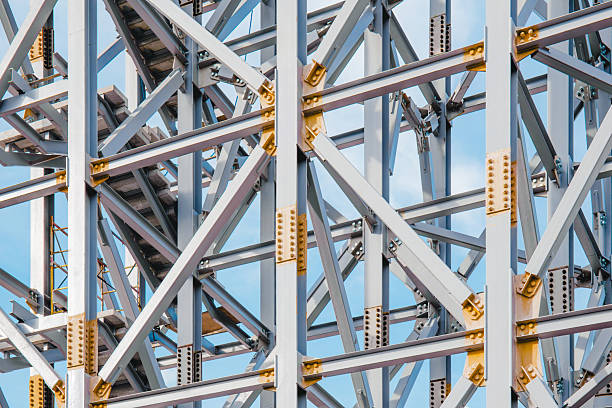
Columns, beams, rafters, braces, and other structural members must be connected in a way that allows forces to move safely through the building. Even a well-designed steel member cannot perform as intended if its connections are incorrectly designed, fabricated, or installed.
Two of the most common connection methods in steel construction are bolted connections and welded connections. Both have important applications in industrial buildings, warehouses, factories, commercial structures, and Pre-Engineered Buildings (PEB).
Choosing between bolted and welded connections depends on structural requirements, fabrication conditions, installation procedures, accessibility, project design, and maintenance considerations.
This article explains the differences between bolted and welded steel connections and examines when each method may be appropriate.
What Are Steel Structure Connections?
A steel structure connection is the point where two or more structural members are joined together.
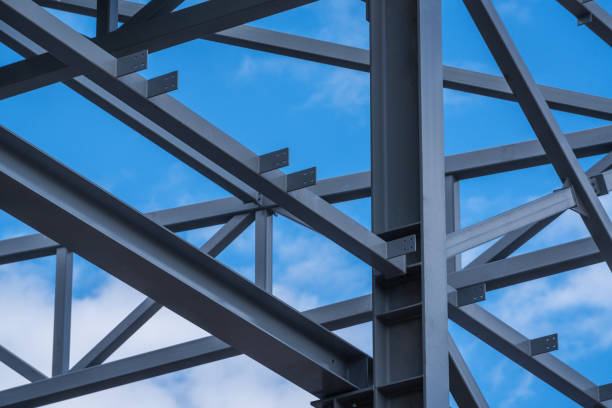
Connections may transfer different types of forces, including:
- Tension
- Compression
- Shear
- Bending moment
- Torsion
The connection must be designed to transfer the required forces without failure or excessive deformation.
Common steel connections include beam-to-column connections, column base connections, brace connections, rafter connections, and structural splices.
The behavior of each connection depends on its geometry, materials, fasteners, welds, and the way it interacts with the surrounding structural members.
Bolted Steel Connections
Bolted connections use high-strength or structural bolts to join steel components.
A typical bolted connection may include:
- Structural bolts
- Nuts
- Washers
- Connection plates
- Angles
- Gusset plates
Holes are prepared in the connected steel members and plates, after which the components are aligned and secured using the specified bolts.
Bolted connections are widely used because they can be efficient to fabricate and relatively practical to assemble on construction sites.
Advantages of Bolted Connections
One of the main advantages of bolted connections is their suitability for site installation.
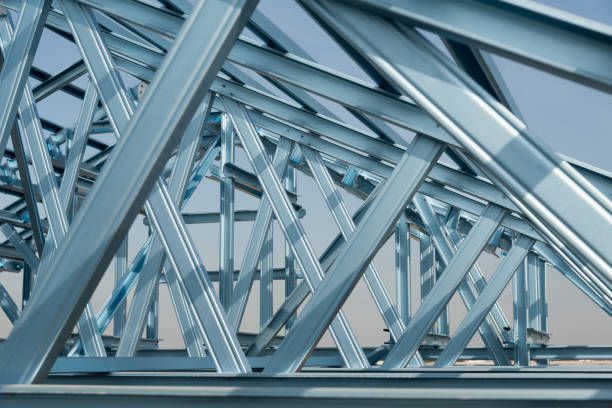
Unlike welding, bolting does not require the creation of a weld directly at the construction site. This can simplify installation where site conditions are difficult or where weather and access could affect welding operations.
Other advantages include:
- Efficient site assembly
- Easier inspection
- Convenient installation
- Potential for disassembly
- Reduced dependence on site welding
- Suitable for modular construction
- Practical for many PEB applications
Bolted connections can also make certain future modifications easier because components can potentially be disconnected without cutting structural members.
Types of Bolted Connections
Bolted connections can be categorized according to how the bolts transfer forces.
Bearing-Type Connections
In bearing-type connections, forces are transferred through contact between the bolt and the surrounding hole, together with the connected plates.
The connection must be designed to ensure that the bolts and connected steel have adequate capacity.
Slip-Resistant Connections
Slip-resistant or friction-type connections are designed so that friction between the connected surfaces resists relative movement.
These connections can be useful where controlling slip is important.
The required bolt pretension, surface condition, and installation procedure must be properly specified and controlled.
Welded Steel Connections
Welded connections join steel components by using heat, pressure, or a combination of both to create a permanent connection.
Different welding processes can be used depending on the material, member geometry, fabrication environment, and project specifications.
Welding is particularly common in steel fabrication facilities because components can be positioned accurately and welded under controlled conditions.
Typical welded connections may include:
- Fillet welds
- Groove welds
- Full-penetration welds
- Partial-penetration welds
The appropriate weld type depends on the structural forces and connection configuration.
Advantages of Welded Connections
Welding can provide strong and compact connections without requiring additional bolt holes and connection plates in some applications.
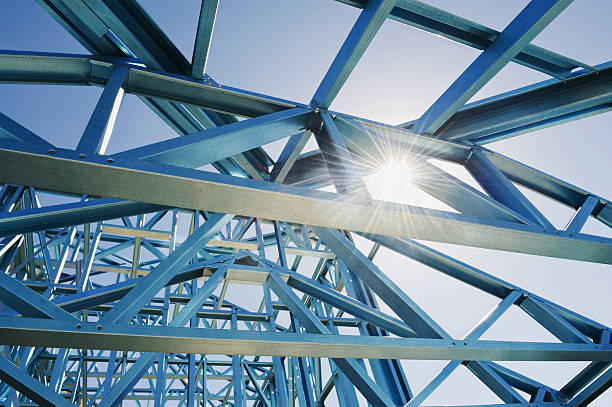
One advantage is that welded connections can create a continuous connection between structural components.
Other potential advantages include:
- Compact connection geometry
- Efficient use of space
- Strong permanent joints
- Suitable for complex connection configurations
- Excellent application in controlled fabrication environments
Welding can be particularly effective when structural components are manufactured in a fabrication facility where welding equipment, inspection procedures, and environmental conditions can be controlled.
Bolted vs Welded Connections
The choice between bolting and welding should be based on the requirements of the project rather than assuming that one method is always superior.
| Factor | Bolted Connections | Welded Connections |
|---|---|---|
| Site installation | Generally practical | Can be more demanding |
| Fabrication | Efficient | Highly suitable |
| Disassembly | Possible in many cases | Generally difficult |
| Inspection | Relatively straightforward | Requires welding inspection |
| Weather sensitivity | Lower | Higher during site welding |
| Connection size | May require plates and bolts | Can be more compact |
| Modification | Potentially easier | More difficult |
| PEB applications | Very common | Common in fabrication |
This comparison is general. The actual choice should always be based on structural calculations, project specifications, and applicable standards.
Bolted Connections in PEB Buildings
Pre-Engineered Buildings commonly use bolted connections for site assembly.
PEB components are fabricated and prepared before transportation. Once they arrive at the construction site, columns, rafters, bracing, purlins, and other components can be assembled using specified connection systems.
This approach can help simplify erection and reduce the amount of structural welding required at the site.
Bolted connections are therefore particularly compatible with the modular nature of many PEB systems.
Welded Connections in Steel Fabrication
Although bolted connections are common during site erection, welding remains essential in many steel fabrication processes.
Fabricated steel members may be assembled and welded in a controlled workshop environment before transportation.
This is especially useful for:
- Built-up columns
- Tapered rafters
- Connection plates
- Stiffeners
- Structural assemblies
- Custom steel components
Factory welding can provide better control over positioning, equipment, inspection, and working conditions compared with uncontrolled site welding.
Connection Design and Structural Loads
Connections must be designed according to the forces they are expected to transfer.
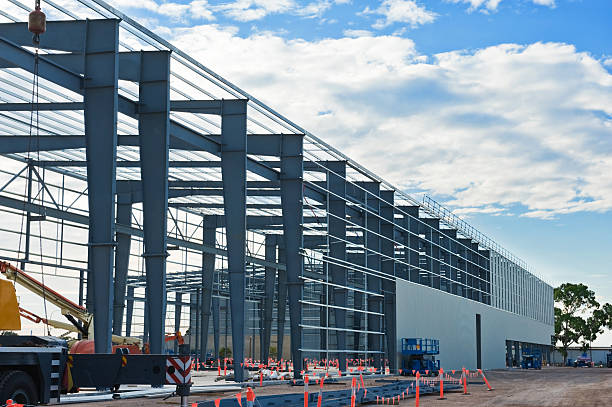
A connection may be subjected to:
- Axial tension
- Axial compression
- Shear
- Bending
- Torsion
- Combined loading
For example, a simple beam connection may primarily transfer shear, while a moment-resisting beam-to-column connection must transfer significant bending moments and associated forces.
Engineers must also consider the behavior of the connected structural members.
A connection that is stronger than the surrounding member is not automatically an efficient solution. The complete load path should be evaluated.
Connection Stiffness and Structural Behavior
Steel connections can behave differently depending on their stiffness and configuration.
Some connections are designed to allow rotation, while others are intended to resist rotation and transfer bending moments.
Structural analysis models should therefore reflect the intended behavior of the connection.
Common categories include:
- Simple connections
- Semi-rigid connections
- Moment-resisting connections
Selecting the correct connection behavior is important because it affects how loads are distributed throughout the structural frame.
Bolting Procedures and Quality Control
Proper bolt installation is essential for structural performance.
Quality control may include checking:
- Bolt grade
- Bolt diameter
- Bolt length
- Hole diameter
- Washer arrangement
- Bolt alignment
- Tightening procedure
- Required pretension where applicable
High-strength bolts may require specific installation procedures to achieve the required pretension.
Incorrect tightening can reduce the intended performance of the connection.
Welding Quality Control
Welded connections require detailed quality control.
Important considerations include:
- Welding procedure
- Welder qualification
- Welding consumables
- Preheating where required
- Weld size
- Weld continuity
- Visual inspection
- Non-destructive testing where required
Potential welding defects can include cracks, incomplete fusion, porosity, undercut, and inadequate weld size.
The required inspection level depends on the connection type and project specifications.
Shop Connections vs Field Connections
One important consideration is where the connection will be made.
Shop connections are fabricated under controlled conditions, while field connections are completed at the construction site.
Welding is generally easier to control in a fabrication facility because environmental conditions, equipment, positioning, and inspection can be managed more effectively.
Bolting is often highly practical for field connections because it simplifies assembly and reduces dependence on site welding.
This is one reason why many steel buildings use a combination of welded shop connections and bolted field connections.
Connections and Structural Safety
Connections must be treated as critical structural components.
Failure of a connection can affect the load path and potentially compromise multiple structural members.
Proper connection design should consider:
- Member forces
- Material strength
- Bolt capacity
- Weld capacity
- Plate thickness
- Edge distances
- Hole spacing
- Local buckling
- Connection geometry
- Installation tolerances
The connection should be designed as an integral part of the structural system.
Connections in Industrial Buildings
Industrial buildings often have specialized connection requirements.
Factories and warehouses may include:
- Overhead cranes
- Heavy equipment
- Large doors
- Mezzanine floors
- Long-span frames
- Bracing systems
- Equipment platforms
These features can introduce additional structural forces and influence connection design.
Crane-supported structures, for example, can experience repeated dynamic and horizontal forces that require appropriate engineering consideration.
Maintenance and Inspection
Regular inspection can help identify connection problems before they become serious.
For bolted connections, inspections may look for loose or damaged bolts, corrosion, deformation, and changes in connection geometry.
For welded connections, inspections can identify cracks, corrosion, visible defects, or other signs of deterioration.
Industrial environments with moisture, chemicals, vibration, or temperature changes may require more frequent inspection and maintenance.
Choosing Between Bolted and Welded Connections
The choice should consider the entire project.
Important factors include:
Structural Requirements
The connection must safely transfer the required forces and provide the intended structural behavior.
Fabrication Conditions
Connections fabricated in controlled workshop conditions may benefit from welding.
Site Conditions
Where site access or weather makes welding difficult, bolting can be more practical.
Construction Sequence
The erection method can influence which connection system provides the most efficient installation.
Future Modification
Bolted connections may offer greater flexibility where future disassembly or modification is expected.
Inspection Requirements
Both systems require quality control, but the inspection methods and procedures differ.
The Role of Euro Steel in Steel Connections
Connection design and fabrication are important parts of a complete steel structure project.
Euro Steel provides steel structure solutions for industrial and commercial buildings, where structural members and their connections are coordinated as part of the overall engineering and fabrication process.
For factories, warehouses, and PEB buildings, the appropriate combination of bolted and welded connections can be selected according to structural requirements, fabrication conditions, installation procedures, and project specifications.
A coordinated approach helps ensure that connections perform as intended while remaining practical to fabricate, transport, and assemble.
Conclusion
Bolted and welded connections are both fundamental to modern steel construction. Each method has advantages and limitations, and the appropriate choice depends on structural requirements, fabrication conditions, site conditions, installation procedures, and future modification needs.
Welding is particularly effective for many shop-fabricated steel components, where controlled conditions can support accurate fabrication and quality inspection. Bolting is highly practical for many field connections and is widely used in PEB and industrial building erection.
In many modern steel structures, the most efficient solution is not to choose exclusively between bolting and welding. Instead, engineers use both methods strategically, with welded connections often prepared during fabrication and bolted connections used extensively during site assembly.
Proper engineering, fabrication, inspection, and installation are essential regardless of the selected connection method. With coordinated structural solutions, Euro Steel supports the development of reliable steel buildings for industrial, commercial, and warehouse applications.
Frequently Asked Questions
What is the difference between bolted and welded steel connections?
Bolted connections use structural bolts to join steel components, while welded connections use welding to create a permanent joint. Both can provide strong structural connections when properly designed and installed.
Are bolted connections better than welded connections?
Neither method is universally better. Bolting is often practical for site installation, while welding can be highly efficient for controlled fabrication environments. The appropriate method depends on the project requirements.
Why are bolted connections common in PEB buildings?
Bolted connections are practical for field assembly and can simplify the erection of prefabricated steel components. This makes them well suited to many Pre-Engineered Building systems.
Are welded connections stronger than bolted connections?
A properly designed welded connection can provide substantial structural capacity, but connection strength depends on the specific design, materials, geometry, weld type, and loading conditions. A properly designed bolted connection can also provide excellent structural performance.
Can bolted steel connections be removed?
Yes. Bolted connections can generally be disassembled by removing the bolts, provided that the structure has been properly designed and the modification is carried out under appropriate engineering guidance.
Where are welded connections commonly used?
Welded connections are commonly used in steel fabrication facilities for built-up columns, tapered rafters, stiffeners, plates, and other fabricated structural components.
What is a moment connection?
A moment connection is designed to transfer bending moments between structural members while providing significant resistance to rotation. These connections are commonly used in rigid structural frames.
How are steel connections inspected?
Bolted connections can be inspected for bolt type, installation, alignment, and tightening requirements. Welded connections may require visual inspection and, where specified, non-destructive testing.
Can a steel building use both bolted and welded connections?
Yes. Many modern steel structures use welded connections during factory fabrication and bolted connections for field assembly. Combining both methods can provide an efficient overall construction system.
What does Euro Steel provide for steel structure connections?
Euro Steel provides steel structure solutions in which structural members and connections are engineered and coordinated according to the requirements of industrial, commercial, warehouse, and PEB projects.